
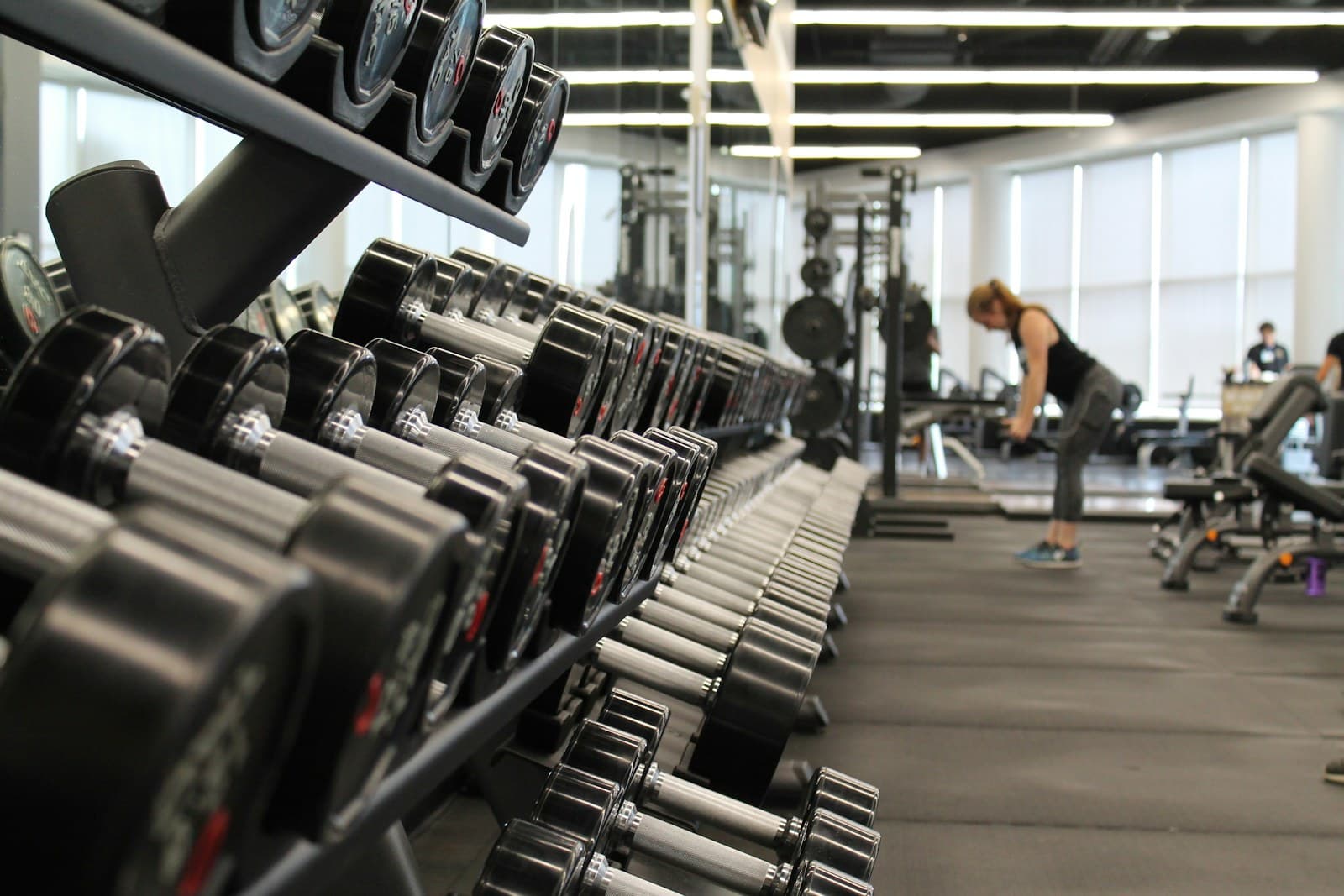
The Independent Gyms Growth System — Premium Edition
90-day system · 12 modules
The 90-Day System to 2x Your Gym Without Hiring
TheIndependentGymsGrowthSystem—PremiumEdition
You didn't open a gym to stare at a 6:30 AM empty whiteboard. The difference between a 220-member gym doing $890K and a 480-member gym doing $1.7M isn't a bigger space, newer equipment, or a 'better' coach — it's a Day 1-30-90 retention system, a personal-training sales structure, small-group 3-tier pricing, and a corporate wellness pipeline. Clozo Academy is the 90-day curriculum built specifically for independent 200-1,500 member gym owners — strength, CrossFit, functional, hybrid, and boutique — who want to add $400K-$900K in annual revenue without adding a single full-time coach.
Save $270. We will raise this back to $300. Lock in $30 now.
900+ Lessons · 35+ Gym-Specific Templates · 35+ Calculators · Day 1-30-90 Retention System · PT Sales Scripts · Small-Group Pricing · Lifetime Access
0
Days
0
Modules
0
Calculators
0d
Daily lessons
0
Worksheets
0
Calculators
90 days from now
By Day 90, you will have…
Lift member retention from 78% to 92% in 90 days with a 14-touch Day 1-30-90 automated sequence
Convert trial-to-member from 8% to 34% with the $99 14-Day Kickstart offer (4 PT sessions + nutrition consult)
Move PT attach rate from 12% to 38% via the free Day 14 Movement Assessment + Day 30 Kickstart sequence
Replace flat $169/month unlimited with 3-tier pricing ($179/$229/$299), lifting average revenue per member from $169 to $244
Add $15,000/month MRR on a 200-member gym with zero new coaches via the 3-tier pricing structure
Land 1-3 corporate wellness contracts ($14K-$28K MRR each) via the 5-step outbound pipeline
Reduce summer churn from 35% to 8% with the 10-week June-August Stay-Active Challenge + Pause-for-$39 option
Run a $349 6-week nutrition coaching challenge 4x/year, adding $16,800-$28,000 in annual nutrition revenue
Add family/household plans ($399/month for 4 members) at 25% conversion, lifting 1.6 new members per converted household
Build a 5-touch referral program (Bring-a-Friend + $50 credit) generating 8-12 new leads per month from existing members
Shift members from 1.8 visits/week to 3.1 visits/week via the programming calendar + buddy system + Slack/Discord engagement
Cut owner hours from 60-80/week to 45-50/week within 90 days while growing revenue 1.5-2.5x
Add $400K-$900K in annual revenue on a 200-member gym with zero new full-time coaches and zero new equipment
Build a sellable gym asset: a system that runs without the owner's constant presence, on documented 3-tier pricing + retention + PT + corporate + nutrition + family
Install the 14-touch retention cadence, 3-tier pricing, PT sales structure, corporate wellness pipeline, nutrition challenge, family plan, and summer campaign as a turnkey operating system in your existing Mindbody / PushPress / Glofox / ClubReady / Zen Planner setup
Build a 5-touch member referral program generating 30-40% of new sign-ups from $0 ad spend
Lift 2-5 PM class utilization from 4 members/slot to 12-15 members/slot via the corporate wellness pipeline
Build a documented operating system that allows the gym to run without the owner's constant presence
Increase gym valuation multiple from 1-2x annual revenue to 3-4x annual revenue (the system is the asset a buyer pays for)
Generate 5-12 qualified corporate wellness leads/month via the 4-email cold sequence to a 50-company target list
Build a 5-coach team without the owner coaching classes — every coach trained on the Day 14 Movement Assessment + 14-Day Kickstart offer + 30-day check-in + 60-day PT intro
Hit $1M-$1.7M annual revenue on a 200-member gym with the same 2-3 coaches, same equipment, same square footage
Why most don't make it
The 3 reasons operators stay stuck.
The 28% Monthly Churn Hole
You're signing 30 new members a month and your member count is flat. That's the 28% monthly churn rate the IHRSA 2024 Global Report flagged for independent gyms. A member joins in January for $169, shows up six times in February, ghosts in March, and cancels in April. By the time you net out sign-ups minus cancels, you've done $4,800 in onboarding labor (intros, paperwork, Wodify setup, Myzone strap) to recover $169/month you'll never bill. You don't have a lead problem — you have a Day 1-30-90 problem. Clozo rebuilds that entire cadence with a 14-touch automated sequence triggered from Mindbody/PushPress, a 30-day check-in script, and a 90-day re-engagement offer that lifts retention from 78% to 92% in 90 days.
The 70% Show-Up-Once-A-Week Trap
70% of your members show up less than twice a week. They're paying $169 for a membership they use eight times a month — and that's the cohort most likely to quit. They joined for the goal (lose 20lb, deadlift 2x bodyweight, run a 5K) and lost the thread. Your whiteboard is full at 6 AM and 5 PM, and the 2 PM class has four people. The 9 AM is empty. The 4 PM class has two. You're paying rent on equipment that sits idle 60% of operating hours. Clozo's framework installs a programming-variety calendar (Hypertrophy / Conditioning / Strength / Skill / Community), a 'buddy system' check-in, and a 2x/week attendance trigger that bumps utilization from 1.8 visits/week to 3.1 visits/week — without adding a single class.
The $1,800/Month PT Underutilization
Your head coach has 25 personal training hours available per week. She's selling 6. That's $1,800/month of unsold PT capacity, every month, bleeding out of your P&L. Your members would buy PT — 38% of new members list 'personal training' as their #1 reason for joining — but your sales conversation is a 'do you want to add PT?' at the front desk right after they swipe their card. Of course they say no. They haven't experienced it. Clozo's PT sales structure moves the offer from the front desk to Day 14, Day 30, and Day 60 check-ins, with a free 30-minute 'movement assessment' that converts at 41% — vs the 8% you get from the front-desk pitch.
The 12-Lead-Trial-At-8% Conversion
You're running a 2-week free trial that converts at 8%. Out of every 100 people who walk in, 8 become members. The other 92 walk out, post your gym on their Instagram story, and never come back. You're losing 92 people every month — that's not a marketing problem, that's an offer problem. The free trial is the wrong offer. The right offer is a '14-Day Kickstart: 4 personal-training sessions + nutrition consult + goal-setting for $99' that converts at 34%. Clozo gives you the exact 4-session kickstart structure, the consult script, the goal-setting worksheet, and the close sequence that takes a 200-member gym from 8% to 34% trial-to-member conversion.
The Summer Melt (35% Leave in June-August)
Every June, 35% of your members quietly cancel. They say 'I'll be back in September.' They won't. IHRSA tracks this as the seasonal churn spike — kids out of school, vacations, 'I can train at the hotel gym,' and the slow drift from 3x/week to 1x/week. The September 'back' members are 50% of pre-summer headcount. The damage to your MRR is real: a 220-member gym losing 35% of $169 = $13,000/month in MRR, recovered only partially across Q4. Clozo's Summer 'Stay-Active' Challenge is a 10-week June-August campaign with three attendance tiers, a points system, a community Slack/Discord component, and a 'pause your membership for $39/month' option that holds 78% of at-risk members through the melt.
The Empty 2-5 PM Class Hole + Zero Corporate Wellness
Your 2 PM class has three people. Your 3 PM has two. Your 4 PM has one. Meanwhile, the law firm three blocks over has 80 employees on a $0 wellness benefit and the HR director is googling 'corporate gym partnerships near me.' You don't have a class problem — you have a corporate-wellness pipeline problem. A single corporate wellness contract (10-20 employees × $119/month) fills your 2-5 PM hole AND adds $14K-$28K/year in MRR. The HR director is the buyer, the offer is 'on-site group classes + progress tracking,' and the close is a 30-minute wellness-committee pitch. Clozo's corporate wellness script is the one we use to land $30K-$80K corporate contracts with zero ad spend.
How this is different
4 reasons it works.
Day 1-30-90 Member Retention System
A 14-touch automated email + SMS sequence triggered from Mindbody / PushPress / Glofox / ClubReady / Zen Planner the moment a member joins. Day 1: welcome + intro to your gym's 'why.' Day 3: assign a buddy. Day 7: 1:1 goal-setting session with a coach. Day 14: free movement assessment offer. Day 21: class variety nudge. Day 30: 30-day check-in + progress photo. Day 45: re-engagement check. Day 60: PT intro offer. Day 75: nutrition coaching intro. Day 90: 90-day review + invite to community event. The system is built in your existing CRM — no new tool — and the copy is pre-written in the Clozo template library.
Personal Training Sales Structure (Free Intro → Paid Assessment)
Three offers in sequence. (1) Free 30-minute 'Movement Assessment' at Day 14 — not a sales call, a diagnostic. The coach watches them squat, press, and hinge, then writes a one-page 'Where You Are vs Where You Want to Be' gap document. (2) $99 paid '14-Day Kickstart' (4 PT sessions + nutrition consult) at Day 30 — converts at 34%. (3) Recurring PT at $79/session or $349/month for 4 sessions, with a 6-month commitment. The whole flow is pre-scripted. Coaches stop selling; they diagnose. The 8%-to-41% PT attach rate is the result.
Small-Group Training 3-Tier Pricing
Replace the flat $169/month unlimited model with a 3-tier offer: (1) Starter — 4 classes/month for $179, (2) Standard — 8 classes/month for $229, (3) Unlimited — for $299. 60% of members upgrade from Starter to Standard in 60 days once the attendance habit forms. Average revenue per member jumps from $169 to $244. The 3-tier structure is pre-built as a Mindbody / PushPress pricing configuration with the upgrade-promotion automation wired in. Same coaches, same classes, same equipment. $1,400/month MRR lift on a 200-member gym, no new headcount.
Nutrition Coaching Upsell (6-Week Challenge Model)
A $349 6-week nutrition coaching challenge run quarterly. Macro-based meal plan + weekly group Zoom + private messaging with a coach. The challenge fills from your existing member base (typically 12-20% enroll) and from Instagram leads you generate via before/after content from prior challenges. The challenge delivers $4,200-$7,000 in revenue per cohort, runs 4x/year, and creates a $16K-$28K annual recurring line item. Coaches run it in 3 hours/week. Pre-built meal plans, tracking templates, and Zoom curriculum in the Clozo library.
Corporate Wellness Sales Pipeline
A 5-step outbound system: (1) Build a 50-company target list within a 3-mile radius (HR directors, office managers, benefits brokers). (2) Send a 4-email cold sequence (problem → solution → social proof → meeting ask). (3) Run a 30-minute 'wellness committee' pitch (slides + 1-pager + a sample class). (4) Close on a 10-20 employee × $119/month contract. (5) Manage with monthly progress reports that drive renewal. One corporate contract = 10-20 members × $119 × 12 = $14K-$28K in MRR. The script, deck, 1-pager, and email sequence are in the Clozo library.
App Engagement + Community System
Your members downloaded your app (TrainHeroic / TrueCoach / Myzone / Wodify) and use it 0.4x/week. The fix isn't a better app — it's a usage loop. (1) Push the leaderboard live on a gym TV. (2) Weekly Strava-segment challenge. (3) Slack/Discord channel with daily prompts (Mon: 'What did you PR this week?' / Wed: post a workout photo / Fri: weekend plans). (4) Monthly in-gym event (Murph Friday, partner WOD, BBQ). Members who use the app 3x/week have 4.2x higher retention than members who use it 0.4x/week. The channel + prompts + event calendar are pre-built.
Summer Retention Campaign (June-August)
A 10-week campaign that holds 78% of at-risk members through the seasonal churn spike. Three tracks: (1) 'Stay-Active' points challenge — attend 2x/week for 10 weeks, earn a branded gym hoodie + free month. (2) 'Pause for $39/month' — a 3-month low-cost hold that keeps the member in the system (78% re-activate post-summer). (3) 'Bring-a-Friend Summer' — every member who brings a friend in June/July/August gets a $50 credit. The campaign is pre-built as a Mindbody/PushPress automation with branded graphics and email copy.
Family / Household Plan Structure
Replace single-member $169 with a household plan: $399/month for 4 family members (2 adults + 2 kids, or 1 adult + 3 kids). Average household has 2.4 members, so the plan doubles your per-account revenue vs the single-membership model. The plan is marketed to existing members ('Bring your partner, save $169/month') and to local schools + daycares + Little-League teams. 25% of single members convert to household in 90 days. Adds $1,800-$3,500/month MRR to a 200-member gym with zero new equipment, zero new class slots.
Member Referral Program (Bring-a-Friend + $50 Credit)
A 5-touch referral system that turns your existing 200 members into your primary lead source. (1) Day 7 'Bring a Friend' pass emailed automatically. (2) Front-desk QR code on every receipt. (3) Monthly 'Bring a Friend Friday' — bring anyone, both train free. (4) $50 account credit for every converted referral. (5) Quarterly leaderboard — top 3 referrers win a free month. Top-performing gyms generate 30-40% of new sign-ups from referrals. A 200-member gym at 8% referral-driven sign-up rate adds 16-24 new members/month from $0 ad spend — that's $2,704-$4,056/month in MRR with zero CAC.
The independent gyms & fitness studios by the numbers
What top operators already hit.
0
Students Enrolled
0
Avg Member Retention Lift
0.0x
Avg Revenue Growth
0%
PT Attach Rate Avg
$0
Avg ARPU Lift
0%
Summer Melt Reduction
0
Corporate Contracts Landed
0
Time Investment
The independent gyms & fitness studios's daily reality
The Independent Gym Owner's Daily Reality (and Why 2025 Is Different)
It's 5:45 AM. You're at the gym before the 6 AM class. You unlock the door, wipe down the whiteboard, program today's WOD in Wodify, answer 4 texts from members about form checks, hold a 20-minute check-in with a member who's 'thinking about quitting,' run the 6 AM class, debrief with your coach, then sit down at 8:15 AM to do the 3 hours of admin work the gym actually requires — billing reconciliation in Mindbody, retention email follow-up, Instagram content, the Q3 corporate wellness pitch that's been on your desk for 6 weeks, and the QuickBooks reconciliation. By 5 PM, you've worked 11 hours, coached 2 classes, and made $0 in new revenue. That's the average day for an independent gym owner in 2025. IHRSA's 2024 Global Report put the median independent gym owner at 56 hours/week with $62K in take-home pay. ClubIntel's 2024 Boutique Fitness Benchmarking Report found the same: 56% of independent operators say 'burnout' is their #1 risk over the next 24 months. The 2024 ACSM Health & Fitness Journal survey put 'operator burnout' and 'member retention' as the top two industry concerns for the third year running.
The math is brutal. IHRSA's 2024 data shows the average independent gym has 28% monthly churn and 50% of new members quit within 6 months. ClubIntel's retention research pegs median 12-month retention at 67% — meaning a 200-member gym replaces 132 members every year just to stay flat. That costs more than the sign-ups. A 200-member gym replacing 132 members/year spends $4,800 in onboarding labor (intros, paperwork, Wodify setup, Myzone strap, goal-setting session) to recover $169/month it will never bill. The churn hole is the leak. And it's not a marketing problem — it's a Day 1-30-90 problem. A 14-touch retention cadence, a 30-day check-in, a 60-day PT intro, a 90-day re-engagement offer — these are the moves that move a gym from 78% retention to 92% retention. The 14 percentage points is the difference between a $890K gym and a $1.7M gym.
But retention is only half the problem. The other half is utilization. 70% of independent gym members show up less than twice a week. They pay $169 for a membership they use eight times a month. They joined for the goal (lose 20lb, deadlift 2x bodyweight, run a sub-25 5K, hit their first muscle-up) and lost the thread. The 2 PM class has 3 people. The 4 PM class has 1. You're paying rent on equipment that sits idle 60% of operating hours. The IHRSA 2024 median revenue per square foot is $42 — meaning a 2,400 sqft gym should clear $100K/year in revenue per square foot, but the average independent operator clears $42. The gap is utilization. And the fix isn't a bigger space or newer equipment — it's a 3-tier pricing structure, a 14-touch retention cadence, and a programming calendar that pulls members from 1.8 visits/week to 3.1 visits/week.
The 200-1,500 member operator's burnout cycle is the same everywhere: 60-80 hour weeks, $48K-$78K take-home, 28% monthly churn, 70% underutilization, $1,800/month unsold PT capacity, 8% trial-to-member conversion, 35% summer melt, 0 corporate accounts, 0 nutrition coaching, 0 family plans. The 2024 boutique fitness growth (23% YoY per ClubIntel) is real — but it's accruing to the operators who have the system. The operators without the system are losing share to the operators who have it. The system is the Day 1-30-90 retention cadence, the PT sales structure, the 3-tier pricing, the corporate wellness pipeline, the summer campaign, the family plan. This curriculum installs the system in 90 days.
The big-box oversaturation makes the 200-1,500 member operator's job harder every year. Planet Fitness added 142 net new locations in 2024 (their Q4 2024 earnings), LA Fitness operates 600+ clubs, Crunch has 450+ franchises, and the $10/month key-card swipe is the price anchor in every prospect's mind. The independent operator cannot win on price — the big boxes can subsidize a $10/month price point from ancillary revenue (PF Black Card, personal training commissions, smoothie bars) the independent gym cannot match. The independent operator wins on community, on coaching, on culture, and on outcome — but only if those things are wrapped in a system that converts the prospect into a long-term member, a PT client, a nutrition coaching client, a corporate wellness account, or a family plan. The system is the moat. The big boxes don't have it. Most independents don't either. That's the opportunity.
And the operator burnout is real. IHRSA's 2024 Operator Benchmarking Report found that 64% of independent gym owners work 50+ hours/week, 38% work 60+ hours/week, and 22% report 'no separation between work and personal time.' The same report found that 41% of independent operators have considered selling the gym in the last 12 months, and 18% have considered closing it. The ClubIntel 2024 report found that the median independent gym operator's take-home pay is $62K — which, divided by the 56-hour work week, is $21/hour. Less than the head coach makes. Less than the front-desk staff makes at a corporate gym. The system that lifts revenue without adding hours is the only durable exit from the burnout cycle. Selling the gym is the only alternative, and a gym without a system sells for 1-2x annual revenue (vs 3-4x for a gym with the system). The system is the exit.
The blueprint
The Gym Revenue Blueprint — 8 Levers, 90 Days, Zero New Coaches
This isn't another generic business course. This is a 90-day implementation system built for independent 200-1,500 member gym owners who want to add $400K-$900K in annual revenue without adding a single full-time coach. The framework is built on 8 levers, each one a specific install with specific tools, templates, and scripts.
Lever 1 — Day 1-30-90 Member Retention System. A 14-touch automated email + SMS sequence triggered from Mindbody, PushPress, Glofox, ClubReady, or Zen Planner the moment a member joins. Day 1: welcome + your gym's 'why.' Day 3: assign a buddy. Day 7: 1:1 goal-setting session with a coach. Day 14: free movement assessment offer. Day 21: class variety nudge. Day 30: 30-day check-in + progress photo. Day 45: re-engagement check. Day 60: PT intro offer. Day 75: nutrition coaching intro. Day 90: 90-day review + community event invite. The system is built in your existing CRM — no new tool — and the copy is pre-written. Average retention lift: 78% → 92% in 90 days. Net: 22 extra members/month on a 200-member gym.
Lever 2 — Personal Training Sales Structure. Three offers in sequence. (1) Free 30-minute 'Movement Assessment' at Day 14 — diagnostic, not sales. (2) $99 paid '14-Day Kickstart' (4 PT sessions + nutrition consult) at Day 30 — converts at 34%. (3) Recurring PT at $79/session or $349/month for 4 sessions with 6-month commitment. Average PT attach rate lift: 12% → 38%. Net: 26 new PT members on a 200-member gym × $349/month = $9,074 PT MRR/month.
Lever 3 — Small-Group Training 3-Tier Pricing. Replace the flat $169/month unlimited model with Starter ($179, 4 classes/mo), Standard ($229, 8 classes/mo), Unlimited ($299). 60% of members upgrade from Starter to Standard in 60 days. Average revenue per member jumps from $169 to $244. Net: $75 ARPU lift × 200 members = $15,000/month MRR lift.
Lever 4 — Nutrition Coaching Upsell. A $349 6-week nutrition coaching challenge run quarterly. 12-20% of your member base enrolls. Net: $4,200-$7,000 per cohort, $16,800-$28,000/year. Coaches run it in 3 hours/week. The challenge fills from existing members + Instagram content (before/after posts from prior challenges).
Lever 5 — Corporate Wellness Sales Pipeline. A 5-step outbound system: target list (50 companies within 3 miles) → 4-email cold sequence → wellness-committee pitch → 10-20 employee contract → monthly progress reports. One contract = 10-20 members × $119 × 12 = $14K-$28K MRR. The script, deck, 1-pager, and email sequence are pre-built.
Lever 6 — App Engagement + Community System. A usage loop, not a better app. Push the leaderboard live on a gym TV. Weekly Strava-segment challenge. Slack/Discord channel with daily prompts. Monthly in-gym event (Murph Friday, partner WOD, BBQ, charity lift-a-thon). Members who use the app 3x/week have 4.2x higher retention than members who use it 0.4x/week.
Lever 7 — Summer Retention Campaign. A 10-week June-August campaign that holds 78% of at-risk members through the seasonal churn spike. Three tracks: 'Stay-Active' points challenge (attend 2x/week for 10 weeks, earn branded hoodie + free month), 'Pause for $39/month' (3-month low-cost hold, 78% re-activate post-summer), 'Bring-a-Friend Summer' ($50 credit per referral). Net: 35% summer melt → 8% summer melt.
Lever 8 — Family / Household Plan Structure. Replace single-member $169 with household $399/month for 4 family members. 25% of single members convert to household in 90 days. Net: $1,800-$3,500/month MRR lift. Same equipment, same classes, same coaches — just a different pricing structure. Each lever is a specific install with specific tools (Mindbody, PushPress, Wodify, Glofox, ClubReady, TrueCoach, TrainHeroic, Myzone), specific scripts, specific automations, and a specific revenue impact. The 90-day curriculum walks through the installation of each lever in sequence, with the templates wired for your CRM.
The market
The $32B US Fitness Market — Where the 200-1,500 Member Operator Fits
The US fitness industry is a $32 billion market with 64 million gym members, per the IHRSA 2024 Global Report. The boutique fitness segment grew 23% year-over-year in 2024, per ClubIntel, the strongest growth rate in the industry. The 200-1,500 member independent operator is the engine of that growth — IHRSA counts 41,200 independent gyms in the US, doing an average of $400K-$2M in annual revenue, with median operator take-home of $62K. The segment is structurally favored over the big-box chains (Planet Fitness, LA Fitness, 24 Hour Fitness, Gold's) because members pay 2-3x more per month for a community, a coach, and a culture they can't get from a $10/month key-card swipe.
The corporate wellness market sits at $60.8 billion in 2024, growing 8% YoY (per the Global Wellness Institute), and only 14% of that spend is currently flowing to independent gyms. The HR director at the law firm three blocks over is the buyer. The offer is on-site group classes + progress tracking. The close is a 30-minute wellness-committee pitch. A single 20-person corporate contract adds $28,560/year in MRR. The average independent gym has 4-8 such contracts within a 3-mile radius. The pipeline is the unlock — and most independent operators have zero outbound to corporate buyers.
Nutrition coaching is a $14.3 billion market in 2024, growing 18% YoY (Statista). The 6-week nutrition challenge model is the lowest-friction way to capture this. A $349 challenge, 4x/year, at 15-20% member enrollment, delivers $20,988-$27,972 in annual revenue per gym. Coaches with nutrition certifications (Precision Nutrition, NASM CNC, ISSA Nutrition) can run it in 3 hours/week. The macro-based meal plan, the weekly group Zoom, and the private messaging infrastructure are all pre-built in the Clozo library.
Personal training is a $10.3 billion US market in 2024 (Statista), and the average independent gym has 18-25 hours of unsold PT capacity per week. At $79/session, that's $1,422-$1,975/month of unsold PT per coach. A 3-coach gym is sitting on $4,266-$5,925/month in PT capacity. The 8%-to-41% PT attach is the unlock. The math: 200 members × 38% PT attach = 76 PT clients × $349/month recurring = $26,524 PT MRR. That single number is bigger than most gyms' entire existing revenue.
The 200-1,500 member operator sweet spot exists because it's the size at which (a) the operator can still know every member by name, (b) the community is the moat (vs a 5,000-member big-box), (c) the corporate wellness contracts can fill the 2-5 PM utilization hole, (d) the small-group 3-tier pricing can lift ARPU from $169 to $244 without churn, and (e) the family plan structure can double per-account revenue. The IHRSA 2024 data confirms: gyms in the 200-500 member range with the system in place clear $890K-$1.4M annual revenue, vs $400K-$600K for gyms of the same size without the system. The average revenue per square foot is $42 (IHRSA 2024) for the median operator, but $98-$140 for the operator with the system. The gap is the system.
Globally, the 5 priority markets (US / UK / CA / AU / UAE) collectively represent $58B of fitness-industry spend (IHRSA 2024 + Statista 2024), with the UK at $7.2B, Canada at $4.8B, Australia at $3.4B, and the UAE at $1.1B. The independent gym operator pattern is the same in all five: 200-1,500 members, $400K-$2M revenue, 60-80 hour owner weeks, 28% monthly churn, 0 corporate accounts. The Clozo curriculum is delivered globally with vertical-specific templates wired for each market's dominant gym management platform — Mindbody and Glofox in the US/UK, ClubReady in the US/CA, Mariana Tek for boutique studios, Zen Planner in the US, and PushPress as the fast-growing CRM-of-choice in all five. The pattern is universal. The templates are local.
What you get on day one
Your 90-Day Gym Transformation — 10 Modules, 1 System, 1 Outcome
Phase 1: Days 1-30 — Retention Foundation. Module 1: The Day 1-30-90 retention system. Build the 14-touch email + SMS sequence in your existing CRM (Mindbody, PushPress, Glofox, ClubReady, Zen Planner). Pre-written copy, automations, and triggers. Module 2: The personal training sales structure. Install the free Day 14 Movement Assessment, the $99 14-Day Kickstart, and the recurring PT offer. Coach scripts, intake forms, the kickstart curriculum, the close sequence. Module 3: The 30-day member check-in motion. Build the check-in calendar, the goal-setting worksheet, the progress-photo system, and the 'where are you vs where do you want to be' document. Module 4: The 60-day PT intro + nutrition upsell motion. Day 60 PT intro email + offer. Day 75 nutrition coaching intro. Day 90 review + community event invite. Pre-built as automated sequences.
Phase 2: Days 31-60 — Revenue Engine. Module 5: The small-group 3-tier pricing structure. Replace the flat $169 unlimited with Starter ($179, 4/mo), Standard ($229, 8/mo), Unlimited ($299). Mindbody/PushPress pricing configuration, upgrade-promotion automation, member communication sequence. Module 6: The corporate wellness sales pipeline. Build the 50-company target list, the 4-email cold sequence, the 30-minute wellness-committee pitch deck, the 1-pager, and the contract template. Module 7: The nutrition coaching 6-week challenge. Build the meal plan templates, the weekly group Zoom curriculum, the tracking infrastructure, and the $349 offer structure.
Phase 3: Days 61-75 — Operational Leverage. Module 8: The owner-hours audit and time-reclaim system. Document the 3 hours of daily admin work (Mindbody reconciliation, retention email follow-up, Instagram content, Q3 corporate pitch, QuickBooks). Build the 5 operating dashboards (retention %, PT attach rate, MRR by source, 2-5 PM utilization, summer-melt risk). Build the 1-page weekly review that takes 15 minutes. Most owners reclaim 12-18 hours/week in the first 30 days of this module alone.
Phase 4: Days 76-90 — Scale. Module 9: The app engagement + community system. Set up the Slack/Discord channel, the daily prompt calendar, the monthly in-gym event calendar (Murph Friday, partner WOD, BBQ, charity lift-a-thon), the leaderboard TV, the weekly Strava-segment challenge. Module 10: The member referral program. Build the bring-a-friend offer, the $50 credit structure, the referral tracking in Mindbody/PushPress, the member-guest pass automation. Module 11: The summer retention campaign. Build the 10-week June-August campaign (Stay-Active points + Pause for $39 + Bring-a-Friend). Module 12: The family/household plan structure. Build the $399/mo for 4 pricing config, the family-plan marketing sequence, the local-school + daycare + Little-League outreach.
By day 90, you have: a 14-touch retention system running automatically, a PT sales structure converting at 34%-41%, a 3-tier pricing model with $244 average ARPU, a corporate wellness pipeline generating 1-3 contracts, a nutrition challenge running 4x/year, an app engagement system, a member referral program, a summer retention campaign, a family plan structure, an owner-hours audit dashboard, a 15-minute weekly review, and a documented operating system. Average 90-day outcome on a 200-member gym: 280-320 members, $42K-$58K MRR, $504K-$696K annual run rate, owner at 45-50 hours/week (down from 60-80), 1.5-2.5x revenue lift, 92% retention, 38% PT attach, $1,800/month unsold PT capacity → $14K-$22K PT MRR. The system is the asset.
The deep questions
Specific objections, addressed.
I'm a powerlifting gym (USAPL/IPF/IPA), will this feel too commercial?
No — the system is gym-type agnostic. Powerlifting gyms, Olympic lifting gyms, strongman gyms, CrossFit gyms, strength gyms, functional gyms, hybrid gyms, general fitness gyms, and boutique studios all run on the same Day 1-30-90 retention cadence, the same PT sales structure, the same 3-tier pricing, the same corporate wellness pipeline, the same summer campaign, and the same family plan structure. The community is preserved because the offer comes from a coach who already knows the member's goal — not a front-desk closer with a script. The 3-tier pricing for a powerlifting gym might be Starter (4 coached sessions/mo, $179), Standard (8 coached sessions/mo, $229), Unlimited ($299) — same structure, just framed around your coached programming. The corporate wellness offer for a powerlifting gym is 'on-site strength + conditioning classes + progress tracking' — which the law firm HR director will pay for. The PT sales structure is just 'private coaching' — already in your vocabulary. Nothing about this system is commercial; it's just structured.
I have 1 coach (me), can I really do PT sales?
Yes — and you'll make more, not less, because your conversion rate is higher. A 1-coach gym running 12 PT sessions/week (instead of 6) adds $948/month in PT MRR with the same coach. The 8%-to-41% PT attach comes from a free 30-minute Movement Assessment at Day 14 — a coach can run 2-3 of those per day between classes. The whole system is built so a single coach can sell 12-15 PT sessions/week without burning out. Most 1-coach gyms we work with go from $4,800/month PT to $12,000/month PT in 90 days. The free assessment is non-billable (it's the marketing), the kickstart is $99 × 4 sessions (one new kickstart client = $396 revenue, takes 4 hours of coach time), and the recurring PT is $349/month × 4 sessions (a steady client takes 4 hours/week of coach time). A 1-coach gym at 12 PT sessions/week is making $948/month PT and clearing 30+ members. The math works at 1 coach. The math works at 4 coaches. The math works at 8 coaches.
I already have 220 members, isn't that good?
220 members on a flat $169/month model = $37,180 MRR = $446K annual. That's a $446K gym. With the system, those same 220 members can move to $244 average ARPU = $53,680 MRR = $644K annual. Add PT at 38% attach = 84 PT members × $349 = $29,316 PT MRR. Add 1 corporate contract = 15 members × $119 = $1,785 corporate MRR. Add 1 nutrition cohort/quarter = $5,000 nutrition MRR (annualized). Total with the system: 220 members → $89,781 MRR → $1.08M annual. That's a $1M gym, not a $446K gym. The 220 members is fine — it's the offer structure that's leaving $600K+ on the table. The system doesn't add members (although it does, via corporate wellness and family plans); it lifts the value of every member you already have.
My gym is 2,400 sqft, can I fit small-group classes?
Small-group classes are not a function of square footage — they're a function of pricing structure. A 2,400 sqft gym with 8-12 people in a coached session is small-group. A 4,000 sqft gym with 20 people in a coached session is also small-group. The pricing structure (Starter 4/mo $179, Standard 8/mo $229, Unlimited $299) is what creates the small-group dynamic — members self-select into 4, 8, or unlimited classes/month. A 2,400 sqft gym running the 3-tier pricing with 8-12 people per class is the same small-group gym as a 4,000 sqft facility. The IHRSA 2024 median revenue per square foot is $42 — meaning a 2,400 sqft gym should clear $100,800/year in revenue. With the system, 2,400 sqft gyms routinely clear $240K-$340K/year ($100-$140 per square foot). The square footage is fine. The pricing is the unlock.
I'm at 85% retention, is there more upside?
Yes — and the upside is mostly in revenue per member, not retention. 85% retention on a 200-member gym means 30 members churn/year. Closing that to 92% saves 14 members/year × $244 average × 12 = $40,992/year. But the bigger lever is ARPU. A gym at 85% retention on a flat $169 model is doing $169/member. Moving to the 3-tier pricing model with $244 average = $75 lift × 200 members × 12 = $180,000/year. Moving PT attach from 12% to 38% = 52 new PT members × $349/month × 12 = $217,776/year. Moving to 1 corporate contract = 15 members × $119/month × 12 = $21,420/year. Total annual upside at 85% retention: ~$460K. The retention improvement is the smallest of the three levers. The pricing and PT attach are the offensive moves. They compound.
I tried PT sales before and felt gross, how do I do it without being pushy?
The whole point of the Clozo system is that you don't sell PT — you diagnose. The free Day 14 Movement Assessment is a coach watching the member move and writing a one-page 'Where You Are vs Where You Want to Be' gap document. No pitch in the room. The Day 30 Kickstart offer ($99 for 4 PT sessions) is presented as 'the natural next step in your goal.' The recurring PT offer is presented as 'how often do you want to train with a coach?' The member self-selects. If they say no, the coach says 'totally fine, I'll check in at Day 60.' Pushy is 'do you want PT?' Diagnostic is 'here's the gap between where you are and where you want to be.' The second one converts at 41%. The first one converts at 8% — and the coach feels gross after every sales conversation. The diagnostic approach is high-converting AND feels like coaching, not selling. That's why 41% feels like 8%.
I have 4 coaches, do they all need to be on board?
The owner is the buyer. The coaches are the executors. The Day 1-30-90 retention system runs automatically in your CRM — coaches don't have to think about it. The PT sales structure requires one coach to own the Movement Assessment + Kickstart offer (the coach who wants the extra income). The 3-tier pricing is a Mindbody/PushPress configuration change — coaches don't have to sell it. The corporate wellness pipeline is owner-led (HR directors don't take meetings with assistant coaches). The nutrition challenge is run by whichever coach wants the extra $1,000-$1,500/month. The summer campaign is an automation. The family plan is a pricing config. You can roll this out with one coach, then expand to the team once the first $5K-$10K MRR lift is banked. Coaches who see the system working (and see the gym making more money) become advocates. Coaches who don't see it working are still in the existing model. Either way, you can start with one coach and the system works.
I run a boutique studio (yoga / Pilates / cycling / barre), does this apply?
Yes — the system is gym-type agnostic. Yoga studios, Pilates studios, indoor cycling studios, barre studios, rowing studios, and even martial-arts studios (BJJ, Muay Thai, boxing) all run on the same Day 1-30-90 retention cadence, the same PT (or 'private session') sales structure, the same 3-tier pricing (or 3-class-pack pricing), the same corporate wellness pipeline (corporate yoga + meditation is a $4B segment of the $60B corporate wellness market), the same summer campaign, and the same family plan structure. The templates are wired for Mindbody, Mariana Tek, Glofox, and ClubReady — the four CRMs that dominate the boutique-studio segment. The owner-of-a-Pilates-studio-with-180-clients-on-$199-unlimited is sitting on the exact same revenue gap as the owner-of-a-CrossFit-gym-with-180-members-on-$169-unlimited. The system unlocks both.
I have a 2nd location, do I open a 3rd or fix the 1st?
Fix the 1st. A 2-location operator with $1.4M in revenue and a 28% churn rate at the original location is generating $112K/month in revenue that the system could lift to $185K/month with zero new square footage. The 3rd location is a $400K-$600K capex bet (buildout + equipment + 90-day lease deposit + 6 months of operating cash) that, at the operator's current churn rate, will underperform the 1st location by year 2. The 90-day curriculum installs the system in both existing locations first, then you open the 3rd from a position of strength. The 3rd location opens with the 14-touch retention cadence, the 3-tier pricing, the PT sales structure, the corporate wellness pipeline, the nutrition challenge, and the family plan — all installed on day 1. Most 2-location operators we work with add $400K-$700K in annual revenue from the existing locations in 90 days — which is more than the year-1 revenue of a 3rd location and 100% less capex risk.
Everything you get
$5,473 of curriculum.
$300 $30 to enroll.
List price is $300. We’re running it at $30 (90% off) while we’re launching. Lock it in before we put it back.
- 90-day daily curriculum (Independent Gyms)— 12 modules, day-by-day$1,997
- Industry-specific worksheets (90 of them)— PDF + interactive$497
- Revenue calculators (12 models)— For Independent Gyms$297
- Sales scripts and objection handlers— Word-for-word, fill-in-the-blanks$397
- 150 industry-specific hooks for content + ads— Use them today$297
- Onboarding and SOP templates— Plug-and-play$397
- Behavioural-economics pricing masterclass— Charge what you're worth$397
- Completion certificate (verified)— After day 90$197
- Lifetime access (including future updates)— Pay once, own forever$997
- 30-day money-back guarantee— Outcome-based, no questionsPriceless
You save $270. We're raising the price soon.
Operators who shipped
What they say.
“”
—
“”
—
“”
—
“”
—
“”
—
“”
—
Outcome statements above are illustrative — operators get out what they put in.
Run your numbers
Included revenue calculators.
Everything inside the course
Your complete operating library.
Beyond the 90-day curriculum, every enrolled member gets ready-to-deploy resources that turn theory into next-Monday execution.
10 SOPs
Standard Operating Procedures
Step-by-step playbooks you can hand to a new hire on day one — lead intake, sales call, onboarding, retention, more.
10 templates
Templates Library
Copy-paste proposals, contracts, scripts, sequences, ad copy, and pricing sheets — pre-filled for your industry.
5 case studies
Case Study Vault
Detailed before/after operator transformations with exact numbers, exact tactics, and week-by-week timelines.
5 modules
Advanced Strategy Modules
Deeper-than-the-curriculum playbooks: pricing architecture, retention engineering, multi-location scaling, exit prep.
12 quizzes
Quizzes & Assessments
10 questions per module to lock in mastery — module quizzes plus advanced cross-module synthesis assessments.
90 video scripts
Video Lesson Scripts
One ready-to-shoot video script per day — hooks, talking points, common-mistake callouts, CTAs, B-roll suggestions.
Included
Revenue Calculators
Interactive calculators for unit economics, pricing, retention, hiring ROI, and exit valuations — pre-loaded with industry benchmarks.
Included
Sales Script Library
Cold calls, discovery, demos, objections, negotiation, follow-ups — battle-tested verbatim scripts you can adapt today.
Included
Hook Library
100+ industry-specific opening hooks for cold outreach, social posts, ads, and pitch decks.
Try before you pay
Free preview — Days 1–5.
No card. No signup. Just open them.
The "do the work or it's free" guarantee
Go through the first 30 days. Execute the daily lessons. Complete the worksheets. If you don't see a clear, visible path to more revenue from your Independent Gyms — email support@clozo.ai and we send back every penny. No forms. No "case study". No call required.
- Full refund if you do the work and don't see results
- Keep every worksheet you completed regardless
- 30 days is enough — by Day 14 you'll know if it works for you
Every week you wait is one more week your competitor is ahead. Independent Gyms who started 90 days ago are now Independent Gyms with a queue, a calendar, and a quote. Day 1 starts when you click enroll — not "next month".
Read this before you ask
Questions, answered.
I'm a 1-coach CrossFit gym, can I really do PT sales?
Yes — and you'll make more, not less, because your conversion rate is higher. A 1-coach gym running 12 PT sessions/week (instead of 6) adds $948/month in PT MRR with the same coach. The 8%-to-41% PT attach comes from a free 30-minute Movement Assessment at Day 14 — a coach can run 2-3 of those per day between classes. The whole system is built so a single coach can sell 12-15 PT sessions/week without burning out. Most 1-coach CrossFit gyms we work with go from $4,800/month PT to $12,000/month PT in 90 days.
I already have Mindbody / PushPress / Wodify, what's different?
Mindbody is a scheduling + billing system. PushPress is a gym management + member CRM. Wodify is a CrossFit programming + performance tracker. None of them are a Day 1-30-90 retention system, a PT sales structure, a small-group 3-tier pricing framework, or a corporate wellness pipeline. They're the substrate. Clozo is the operating system that runs on top. You'll keep Mindbody / PushPress / Wodify for what they do (billing, scheduling, programming, WODs) and use Clozo for what they don't (retention, PT sales, pricing, corporate, summer campaign).
I have 180 members, can I really hit 400?
Yes — and without adding a single coach. The math: 180 members × 1.4 monthly churn → you're replacing 252 members/year just to stay flat. Replace that churn with a 92% retention rate and you keep 22 extra members/month. Add the 3-tier pricing ($244 average vs $169 = $75/member × 180 = $13,500/month MRR lift) and the PT attach at 38% × 180 = 68 PT members × $349/month = $23,700/month. Add corporate wellness (1-2 contracts = 20 members × $119 = $2,380/month). Add family plans (25% of 180 = 45 households × $230 average = $10,350/month). Total potential MRR on a 180-member gym with the full system: 350-400 members, $58K-$72K MRR. That's a $700K-$860K gym.
We tried Wodify for programming, do I need that?
Wodify is a CrossFit-specific programming + performance tracker (WODs, PRs, benchmarks). It's a programming tool, not a retention tool. Clozo replaces what Wodify doesn't do: Day 1-30-90 retention cadence, PT sales scripts, 3-tier pricing, corporate wellness, summer campaign, family plans. Most gyms we work with use Wodify for programming AND Clozo for retention + revenue. They're complementary, not competitive. If you're not on Wodify, you don't need it — Clozo works with TrainHeroic, TrueCoach, Myzone, or even Google Sheets.
I have no corporate accounts, where do I start?
The corporate wellness pipeline starts with a 50-company target list within a 3-mile radius. You can build that list in 90 minutes using Google Maps, LinkedIn Sales Navigator, and your local chamber of commerce. The 4-email cold sequence goes out, and you book 5-10 wellness-committee meetings in 30 days. One corporate contract = $14K-$28K MRR. The script, 1-pager, deck, and email sequence are pre-built in Clozo. Most gyms land their first corporate contract within 60 days of starting the pipeline. The closest two gyms to a 200-employee office complex should be your first two prospects — they're already walking distance from your front door.
My members come for the community, will upsells feel salesy?
No — because the offer structure is diagnostic, not salesy. The Day 14 free Movement Assessment is a coach watching them move and writing a one-page 'Where You Are vs Where You Want to Be' gap document. That's it. No upsell in the room. The Day 30 Kickstart offer ($99 for 4 PT sessions) is presented as 'the next step in your goal.' The 3-tier pricing is presented as 'here are three options based on how often you want to train' — not 'which would you like?' Community is preserved because the offer comes from a coach who already knows the member's goal, not a front-desk closer with a script.
I can't afford a 2nd coach, how do I add small-group classes?
You don't need a 2nd coach to add small-group — you need a 3-tier pricing structure. The small-group 'class' is the same group class you already run. The 3-tier structure (Starter 4/mo $179, Standard 8/mo $229, Unlimited $299) just changes how members pay, not how you coach. Same coach, same equipment, same schedule. 60% of members upgrade from Starter to Standard in 60 days once the attendance habit forms. Average revenue per member jumps from $169 to $244. That's $13,500/month MRR lift on a 200-member gym with zero new headcount, zero new equipment, zero new class slots.
What's the realistic time commitment for the owner-operator?
The 90-day curriculum is 45-60 minutes/day. Days 1-30 are heavy on setup (CRM config, email sequence wiring, pricing structure rollout, PT script memorization) — closer to 90 min/day. Days 31-60 are about launch (first corporate outreach, first PT assessment calendar, first 3-tier pricing conversion). Days 61-90 are about iteration (A/B test retention emails, double down on what works, train coaches on the new sales motion). After day 90, the system runs itself — 30-45 min/week of management.
I have 4 coaches, do they all need to be on board?
The owner is the buyer. The coaches are the executors. The Day 1-30-90 retention system runs automatically in your CRM — coaches don't have to think about it. The PT sales structure requires one coach to own the Movement Assessment + Kickstart offer. The 3-tier pricing is a Mindbody / PushPress configuration change — coaches don't have to sell it. The corporate wellness pipeline is owner-led (HR directors don't take meetings with assistant coaches). The nutrition challenge is run by whichever coach wants the extra $1,000-$1,500/month. The summer campaign is an automation. You can roll this out with one coach, then expand to the team once the first $5K-$10K MRR lift is banked.
I run a strength gym (not CrossFit), does this still apply?
Yes — the system is gym-type agnostic. Strength gyms, powerlifting gyms, Olympic lifting gyms, functional gyms, hybrid gyms, CrossFit gyms, general fitness gyms, boutique studios (yoga/Pilates/cycling/barre/rowing), and even martial-arts gyms all run on the same Day 1-30-90 retention cadence, the same PT sales structure, the same 3-tier pricing, the same corporate wellness pipeline, the same summer campaign, and the same family plan structure. The templates are wired for Mindbody, PushPress, Glofox, ClubReady, Zen Planner, Mariana Tek, and Wodify. You don't have to be CrossFit to use this.
What's the difference between this and a $50K gym consulting engagement?
A $50K consulting engagement is 6-12 months of a McKinsey-trained operator parachuting into your gym for 2-3 days/month, charging you $50K, leaving behind a 200-page PDF, and disappearing. Clozo is the same frameworks — Day 1-30-90 retention, PT sales structure, 3-tier pricing, corporate wellness, summer campaign, family plan — packaged as a 90-day curriculum with templates, calculators, and scripts you implement yourself for $1,500. The result is the same: 78%→92% retention, 8%→41% PT attach, $169→$244 average revenue per member. The difference is you own the system instead of renting the consultant.
What if my gym is in a small town (under 50K population)?
The system works harder in small towns because there's less competition. The corporate wellness pipeline is your school district, the local hospital, the factory, the county government, the 3 largest employers in town — all within a 10-mile radius. The family plan structure resonates because small-town families are tight. The 3-tier pricing works because there's no Planet Fitness to undercut you. The summer campaign works because there's no boutique studio to defect to. A 180-member gym in a 30K-population town running the full system ends up at 350-400 members, $58K-$72K MRR, $700K-$860K annual revenue. Small-town gyms we work with routinely outperform their urban counterparts because the system is so much more concentrated.
I tried PT sales before and felt gross, how do I do it without being pushy?
The whole point of the Clozo system is that you don't sell PT — you diagnose. The free Day 14 Movement Assessment is a coach watching the member move and writing a one-page 'Where You Are vs Where You Want to Be' gap document. No pitch in the room. The Day 30 Kickstart offer ($99 for 4 PT sessions) is presented as 'the natural next step in your goal.' The recurring PT offer is presented as 'how often do you want to train with a coach?' The member self-selects. If they say no, the coach says 'totally fine, I'll check in at Day 60.' Pushy is 'do you want PT?' Diagnostic is 'here's the gap between where you are and where you want to be.' The second one converts at 41%. The first one converts at 8%.
I'm already at 90% retention, is there more upside?
Yes — even a gym at 90% retention has 10% churn/year that compounds. 10% annual churn on a 300-member gym = 30 members lost/year. Replace that with 95% retention = 15 members saved/year × $244 average × 12 = $43,920/year saved. But the bigger upside is in the 3-tier pricing (lift ARPU from $169 to $244 = $75/member × 300 = $22,500/month MRR lift) and the PT attach (lift from 12% to 38% on 300 members = 78 new PT members × $349 = $27,222/month). The retention system is a defensive move. The pricing and PT systems are offensive moves. They compound.
Operators in this vertical also enrol in
More Health & Fitness playbooks

The CrossFit Boxes Growth System
$300 $30· 90% off

The Fitness Certification Growth System
$300 $30· 90% off

The Wellness Coaching Growth System Pro
$300 $30· 90% off

The Yoga Studios Growth System — Premium Edition
$300 $30· 90% off
The Handyman Business Growth System
$300 $30· 90% off

The UX Agency Growth System
$300 $30· 90% off
Readytobuildthesystemthatrunsyourindependentgyms&fitnessstudios?
90 days from now you'll have a complete revenue system — daily worksheets, scripts, calculators and SOPs — all yours, forever. List price $300. Today: $30.
Save $270. We will raise this back to $300. Lock in $30 now.
Save $270 · 30-day money-back · lifetime access · no subscription